
Mevea Seminar 2026:
Physics-Based Digital Twin in Full Equipment and Intelligent Subsystem Development
Overview
- Event type: Free Live Webinar
- Title: Physics-Based Digital Twin in Full Equipment and Intelligent Subsystem Development
- Date: Wednesday, October 14, 2026.
- Time: 14:00 Helsinki (EEST, UTC+3)
(Local times: Berlin / Paris / Rome 13:00 | London 12:00 | Dubai 15:00 | Singapore 19:00 | New York 07:00 | Tokyo 20:00) - Duration: 2 hours.
Summary
The Engineering Challenge
Electrification and hybridization of heavy machinery introduce uncertainties for designers. Updates to existing, well-known solutions might require working across unfamiliar engineering disciplines and unfamiliar solutions. In the worst case, development is carried out using a traditional siloed approach, which reduces the necessary interaction between engineering disciplines.
In many cases, mechanism-based power distribution solutions for drivelines are replaced with several actuators, setting new requirements for control systems and strategies. The complexity of the systems increases, leading to a need for studies and analysis of the full vehicle and intelligent subsystems.
The Digital Twin Solution
Multi-physics digital twins enabled by Mevea Simulation Software provide a platform for complete machine studies, including the capability for equipment-in-the-loop testing. Complex physical and control systems can be modelled using fit-for-purpose tools and combined into a virtual representation of a full vehicle, including its work process and interaction with the environment. This approach enables the detailed study and design of proposed solutions without physical prototypes while ensuring compliance with requirements and providing a test environment for control system development.
Practical Use Cases
This year’s seminar presents the verification and validation of physics-based digital twin solutions enabled by Mevea Simulation Software for full equipment and intelligent subsystem development. Prinoth’s tracked vehicle electrification example introduces offline validation of a multi-physics digital twin. Oulu University of Applied Sciences and the Institute for Advanced Automotive Propulsion Systems (IAAPS) introduce novel solutions that combine equipment-in-the-loop testing via a dynamometer with real-time digital twins for realistic use cases.
The Agenda
-
Opening at 14:00 (EEST, Helsinki/UTC+3)
-
Introduction, Mevea
-
Mevea Software Solutions Overview, Dr. Asko Rouvinen, Senior Technical Advisor, Mevea
-
Use Case 1: Francesco Salis, Software Development Team Coordinator (R&D), Prinoth (Italy)
Electric Snow Groomer Development: From the Concept to the Snow Through Virtual Simulation
-
Use Case 2: Jukka Säkkinen, Head of Development, Oulu University of Applied Sciences - Oamk (Finland)
Comparison of Full-Scale Off-Road Vehicle Machine-in-the-Loop Simulation and Measured Results
-
Use Case 3: Prof. Sam Akehurst, Research Director, IAAPS (United Kingdom)
Digital Twin Technologies for Cleaner Off-Highway Machinery (DITCH)
-
Closing at 16:00
There will be a short Q&A after each presentation.
Introduction of Speakers and the Agenda

Francesco Salis, Software Development Team Coordinator (R&D), Prinoth (Italy)
Mr Salis coordinates the Prinoth Snow Groomers’ Software Development Team. He joined Prinoth in 2016 as an R&D Engineer and as part of the Software Development Team, focusing on Control, Simulation, and Telematics topics. Since 2019, he has also been collaborating with the MCI Digital Twin Lab and has supervised several master’s thesis projects. He has an M.Sc. degree in Automation and Control Engineering from Politecnico di Milano.
Mr Salis will present how the use of a comprehensive simulation environment, along with large amounts of data coming from the field, enabled the quick development of a fully electric Snow Groomer. Such a project presents numerous and significant technical challenges, and reducing the number of iterations involving physical components is of paramount importance. Simulation and data analysis were key components of its success.
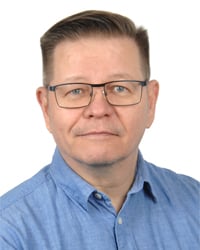
Jukka Säkkinen, Head of Development, Oulu University of Applied Sciences (Finland)
Mr Säkkinen is Head of Development at Oulu University of Applied Sciences (Oamk) and a key contributor to Oamk’s Autonomous Work Machines research programme and Nuvelab testing environment. His work focuses on developing advanced research and validation capabilities for autonomous and energy-efficient mobile machinery, including powertrain testing, digital twins, and Vehicle-in-the-Loop (ViL) and Hardware-in-the-Loop (HiL) methods. He works closely with industry and research organisations to bring simulation, laboratory testing and real-world measurements together for faster and more reliable machine development.
Mr Säkkinen will present how Oamk’s Nuvelab research and testing environment combines full-scale off-road machines with physics-based real-time digital twins in a Vehicle-in-the-Loop (ViL) test environment. Using validation results from the AORO and JARCRAC research vehicles, he will show how simulated driveline loads are compared with measurements from real operating environments and discuss how this approach can reduce field testing while enabling repeatable development and validation of intelligent and energy-efficient mobile machinery.
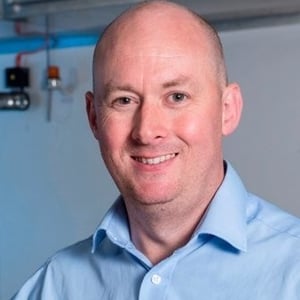
Prof. Sam Akehurst, Research Director, IAAPS (United Kingdom)
Professor Akehurst is Professor of Advanced Powertrain Systems at the University of Bath and Research Director at the Institute for Advanced Automotive Propulsion Systems (IAAPS). He has more than 25 years of experience in propulsion systems research, with a focus on future powertrains and CO₂ reduction. His research covers hydrogen, methanol and gasoline engines, hybrid vehicle technology, advanced transmission systems, thermal management and powertrain modelling. He also leads collaborative propulsion research projects involving automotive, marine and aerospace applications.
Prof. Akehurst will present the outcomes of the DITCH project: Digital Twin Technologies for Cleaner Off-Highway Machinery. The project applied Engine-in-the-Loop development to hybrid construction equipment, utilising a combination of Mevea, Simcenter Amesim, and MATLAB/Simulink models for various subsystems. The models were used to apply representative loads to a JCB diesel engine. The models were also used to evaluate the effects of different hybridisation strategies and component sizing on both fuel efficiency and transient performance.